54: five sonic the hedgehog blogs
The promise of the virtual space has often been this idea of limitless possibility, whether it's in video games, where open world games sell the idea of endless adventure and countless verbs to do or whether it's with the internet, where a Google search or a Siri query can result in all the information of humans past, present, and future—all at one's fingertips.
The reality is a bit more complicated. The mythology of technology has to convince itself and others of this endless fountain of goodies because its own existence is built on the premise of infinite growth and the promise of infinite land, goods, resources for its shareholders, its users, its consumers. The problem is that this oasis is a mirage. While AI has recentered the very real resource usage of virtual computation, there has always been a cost, whether it's the exploitation of workers in Congo for batteries or the electricity required to power the servers that host all the content on the web. It is true that the virtual space offers access to multitudes that might be harder to come by with actual physical space and land, but a byte is not weightless. And the ease of certain technological tools should not be mistaken for a lack of cost.
One of the biggest games currently, and of all time, is Fortnite.
It started as a multiplayer game where you shoot other players until you're the last one standing, but then there was a concert, and then another. Then, we had a Holocaust Museum, and racing, and LEGO, and rhythm game. Fortnite is a juggernaut, not because it has amazing gameplay, but because it had an appealing social function. Fortnite is not a video game, it's a platform.
The other distinguishing feature with Fortnite are the crossovers, characters from other franchises that you can play as, not because they're relevant to the world of Fortnite, but because they make a lot of money. The NFL, John Wick, South Park, Bruno Mars, etc. You know what else has all that? Instagram, Tik Tok, Facebook. Epic Games and increasingly other video game studios are not competing with other video games, they are competing with other social platforms. Their ballooning production costs, and growing demands from executives trying to make the most amount of money means that trying to be a good video game is not profitable enough. Fortnite really encapsulates the cynical end game of any technology product, that it consumes all in its pursuit of infinite growth, that it loses itself in order to please the shareholders—who only see the game the same way they see a phone, or a clothing brand, or an app, as an asset to either squeeze and extract or grow to pull in more to extract later.
There was a time when video games were smaller, and the web felt bigger.
I've lamented about this before, but it's a shame that the notion of surfing the web is dead and most engagement happens on a handful of platforms: Reddit, Wikipedia, Instagram, etc. Once again, the boring churn of capitalism consolidates and kills. GeoCities can not thrive in today's internet, instead creativity has to exist under the much more curated eyes of today's platform holders. Not only do we not have access to our code, we can't even change our profile backgrounds anymore.
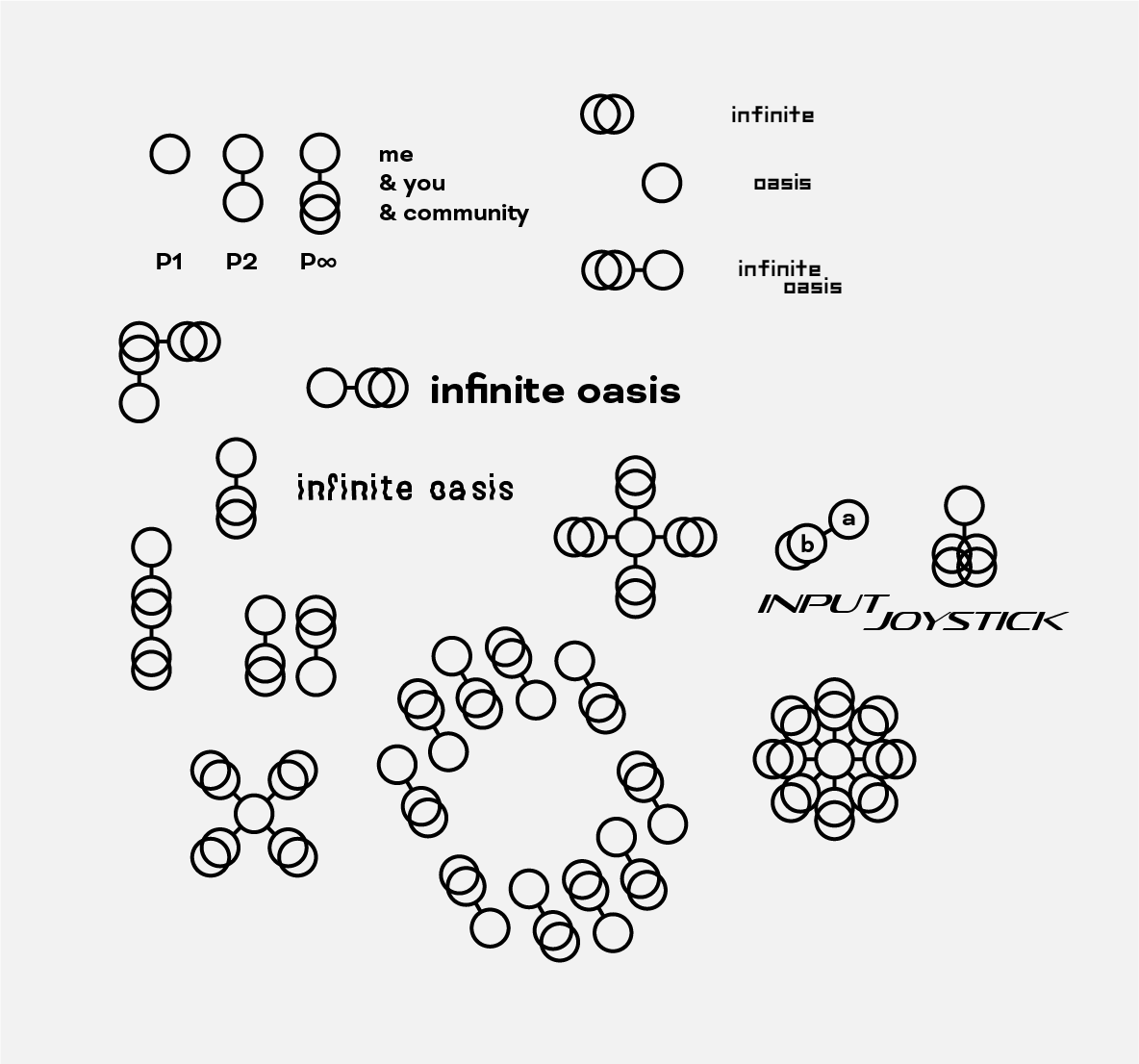
infinite oasis offers to be more than a mirage, a blog of blogs connected by a web ring, an homage to a time of both handcrafted publication (blogs as virtual zines) and handcrafted navigation (web rings, hand-picked links that connected a bunch of sites together, as DIY infrastructure). The blogs would all be engaging with video games or interactive art, the site of this collision course in which art and technology meet, where platform and product have to face media and art object. Just as the video game can not be divorced from the engine it runs on or the console it is hosted on, these video game blogs are both an exploration of form and content.
Each blog may be an experimentation in blogging and blogging platform, maybe they're hosted on an existing blogging platform like Neocities, or maybe they're totally built from the ground up, or maybe the entire blog exists on a Cryptpad sheet. The blogs themselves, now freed from the constraints of traditional publication demands can also be similarly experimental. It can be a blog about all the Sonic games, or we can have 5 blogs by 5 people on all the Sonic games. It can be a blog where games are reviewed exclusively through emoji, or a blog about custom food recipes inspired by video games. It can be a blog that has 3 posts total, or a blog that has a new post once a year.
When we think smaller, the possibilities can actually be bigger, as opposed to these platform behemoths where their aim is always to be the largest—while compromising everything on the way there. While the promise of unlimited riches is a lie, there is still a path towards abundance—genuine abundance. This requires a perpendicular path from the one that's been charted for us by modern technology, and it requires play—a multitude of plays.
My journey in documenting projects, ideas, collaborations, creative sketches, and more can be found at a flower is not a flower.